
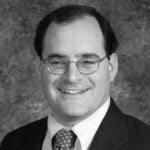

To make the Los Angeles region more of a life sciences powerhouse, industry, academic and civic leaders should take a page out of Boston’s playbook and collaborate more intensely, Peter Slavin, the chief executive of Beverly Grove-based Cedars-Sinai Health System, told a group of industry executives and investors at a recent BioscienceLA conference in West Hollywood.
Slavin spent 18 years as chief executive of Massachusetts General Hospital in Boston before taking the top post at Cedars-Sinai. In the 1990s and early 2000s, he said, the leaders of the top life sciences institutions in Boston got together to try to strengthen the industry. They had seen what happened in the 1980s to Boston’s burgeoning tech sector, watching many of the key players move west to Silicon Valley.
He described a meeting of Boston-area life sciences institution leaders convened by then-Harvard University President Larry Summers. The bottom line, he said, was more collaboration.
A few years after that meeting, he said, a life sciences collaborative for the Boston metro area was launched to help provide funding to local life sciences companies and institutions.
Turning to Los Angeles, he recommended following Boston’s example.
“The question isn’t whether the ingredients are there – they are – but whether we have the sense of urgency to connect those ingredients more intentionally and create the infrastructure, relationships and shared sense of purpose that will allow them to reinforce one another to maximize the network effect,” he said.
Promising life sciences companies
He pointed to some initiatives at Cedars-Sinai, including licensing out research technology developed by Cedars researchers, a life sciences accelerator and even an investment portfolio.
Slavin then urged investors to continue scouring the region’s life sciences sector and helping promising companies navigate the long and complex path toward commercialization of their drugs or other technologies. He also urged academic and major healthcare institutions to share resources.
“We should make it easier for people to traverse our institutions to find the partners, facilities, data, mentorship and talent that they need,” he said.
The conference, which ran from Sept. 29 through Oct. 2, was put on by Culver City-based BioscienceLA, a nonprofit dedicated to catalyzing the local life sciences industry.
