


How Trust May Be Competitive in the AI Age
Artificial intelligence has dominated markets and investor attention, with a handful of mega-cap technology names helping drive broad equity benchmarks to record highs. This initial phase of the AI trade was defined by tangible constraints and the capital deployed to address them – compute supply, data center buildout and securing sufficient power capacity. Early beneficiaries were often closest to those capital flows.
As the AI trade matures, attention is shifting to a harder-to measure metric: the return on that capital investment. The next wave of AI winners may be not just the organizations with the most powerful technology or strongest infrastructure, but those that people trust.
Trust can be difficult to define precisely. But for economies and societies to function, a baseline level of trust must exist among countries, institutions, customers and employees. As AI becomes embedded in decision-making, security and daily life, those that build trust may unlock a durable advantage. In practice, that means securing systems, earning community acceptance, and helping the workforce adapt.
In this article we explore how trust may drive a competitive edge and resilient investment value across three dimensions:
Security, systems, infrastructure. Trust in secure systems may create a durable advantage. AI raises the stakes by increasing the speed and sophistication of cyber threats – and by powering defenses. Critical infrastructure remains a top target. As a result, security priorities are rising for policymakers and executives, and investment is following.
Communities and consumers. Trust can determine the pace and scale of AI growth. The buildout of compute and data centers depends on local permission: power, water, land and public support. Resistance – over affordability, resource strain and transparency – can delay projects and create reputational and execution risk. Developers that operate like trustworthy neighbors may be better positioned over time.
Workforce adaptability. Trust between employees and employers may shape whether AI investment translates into real productivity gains. Adoption that is coerced or unclear can stall; adoption that is transparent, supported and paired with training can compound. The labor market will likely reconfigure unevenly, with some roles disrupted, others amplified, and new ones created – making trust and communication even more central.
In conclusion, these are the early days, but AI is ushering in a profound transformation. Trust – in security, communities and workforce adaptability – may be a defining factor in harnessing the power and managing the risks of AI. Ultimately, humans are resilient. Trust in that resilience, and our collective ability to adapt, will be essential as the AI era unfolds.
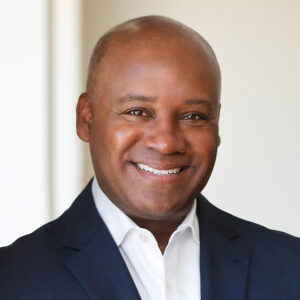
Rick Barragan is the Managing Director,
Los Angeles Market Manager, for
J.P. Morgan Private Bank.
[email protected] | (310) 860-3658
privatebank.jpmorgan.com/los-angeles
Source: “How trust may drive a competitive edge in the age of AI,” Daniel Rourke, head of sustainability research & integration, private bank, Dominick Crisci, May 5, 2026.

