


Three Planning Questions You May Be Asking Now
As markets move and new tax laws take effect, many of our clients are revisiting their financial plans, looking for ways to safeguard and grow their wealth. Here are a few of the top questions clients are asking their J.P. Morgan advisers:
What accounts should I use to start building wealth for my children?
The One, Big, Beautiful Bill Act, signed into law last year, created a new way to encourage savings for minors – a new type of account for children. It’s important to consider how this new account fits into any plans you may have to efficiently build wealth for your children while balancing flexibility, control and tax efficiency.
Generally, you can choose among several account options – each with its own distinct advantages and considerations – to start saving for children. Your personal circumstances, goals and desired level of control will inform your choices.
No matter which account you choose, we recommend starting early. Your J.P. Morgan team can help you measure your gifting capacity, maximize tax efficiency and invest in assets and strategies aligned with your goals and time horizon.
What are my options for my IRA and 401(k)?
Periods of transition – leaving an employer, retiring or beginning a “decumulation” plan – often prompt clients to reconsider their employer-sponsored retirement accounts. Often, they decide to either keep those assets in the employer plan or roll them over into an IRA.
Keeping assets in a 401(k) can be beneficial for those who want to take advantage of options such as the “rule of 55,” which allows penalty-free withdrawals if you separate from service at age 55 or older. It may also be worth delaying a rollover if you want to keep pre-tax dollars out of a Traditional IRA to help avoid the pro-rata rule and maintain flexibility for future backdoor Roth conversions from non-deductible IRA contributions.
Relative to a 401(k) account, a Rollover IRA offers investment flexibility, consolidation of assets and simplified management. It also opens the door to converting traditional retirement assets into a Roth IRA, a strategy that can significantly enhance long-term tax efficiency. The conversion triggers a taxable event, but future growth and withdrawals are tax-free. In addition, Roth IRAs do not mandate required minimum distributions and thus offer greater flexibility. Finally, remember that a Roth conversion is irrevocable – the decision cannot be undone.
What are the benefits of a Donor-Advised Fund (DAF)?
DAFs are a type of charitable giving vehicle that offer a strategic way to pre-fund years of giving while allowing you time to select the organizations to support. Establishing a DAF gives you the benefits of immediate tax deductions, potential tax-free growth within the fund, flexibility to recommend grants over time, low costs to set up and manage, and the option to remain anonymous.
Recent tax law changes may make establishing a DAF even more attractive, particularly by allowing donors to “stack” contributions into a single year to help ensure that gifts exceed the new charitable deduction floor equal to 0.5% of adjusted gross income (AGI), maximizing the available tax deduction.
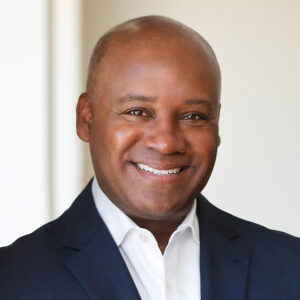
Rick Barragan is the Managing Director,
Los Angeles Market Manager, for
J.P. Morgan Private Bank.
[email protected] | (310) 860-3658
privatebank.jpmorgan.com/los-angeles
Source: “Three planning questions you may be asking now,” Sarah Backer Lyons, vice president, wealth planning and innovation, June 10, 2026

